Monday, 24 November 2008

Sunny Side of the Street...

Below are some jokes to ward away those credit crunch blues.

The credit crunch is getting bad, isn't it? I mean, I let my brother borrow 10 pounds couple of weeks ago, it turns out I'm now Britain's fourth biggest lender.

A man went to his bank manager and said: 'I'd like to start a small business. How do I go about it?'
'Simple,' said the bank manager. 'Buy a big one and wait.'

What's the definition of optimism?
An Investment Banker ironing five shirts on a Sunday evening.

This is not a rescue. - Goldman Sachs Chief Financial Officer David Viniar after Goldman poured $3 billion into one of its hedge funds

George Bush was asked today: "What do you think of the credit crunch?"
He replied, "It's my favourite candy bar."

I went to the ATM this morning and it said “insufficient funds”. I’m wondering is it them or me.

You know it’s a credit crunch when…
1. The cashpoint asks if you can spare any change.
2. There’s a ‘buy one, get one free’ offer - on banks.
3. The IRS is offering a 25 per cent discount for cash-payers.
4. Your builder asks to be paid in Zimbabwean dollars rather than US dollars.

Sunday, 23 November 2008

Starbust


Starbucks was founded in 1971 in Pike’s Place Market, Seattle, Washington. They started out as a small local coffee shop selling fair-trade coffee-beans. In 1983, Howard Schultz, Starbucks' current CEO, joined the company and introduced the idea of selling hot coffee beverages. His proposal was rejected, so he decided to do pursue it on his own. He was convinced that there was a lot of money to be made in selling coffee beverages to Americans on-the-go. In 1985, he opened his first Italian-inspired coffee bar chain, II Giornale. In 1987, he managed to persuade the Starbucks chain to sell, and rebranded his II Giornale outlets into Starbucks. The company expanded rapidly in the U.S. market, which today accounts for around 70% of their sales. Starbucks has been opening a new outlet every single day. Their philosophy is based on a “build it and they will come” strategy and as a result, they are the largest chain of coffeehouses in the world with 15,012 stores across 44 countries.

Nowadays, even Starbucks is in financial trouble due to the current global crisis. In a recent article “Will Your Recession Be Tall, Grande, or Venti” Daniel Gross proposes the Starbucks Theory of International economics. His theory is very interesting and suggests that the higher concentration of Starbucks-stores in a country, the more likely the country will suffer catastrophic financial losses. Surprisingly enough, by looking at Starbucks global presence, their main target areas are in fact those that have been mostly affected.

The Starbucks Coffee crisis was completely unexpected, they were very optimistic and assumed that they would have a continuing growth-pattern. Quite the opposite, their stock-price has dropped 97% this year, and as a result they have been forced to make some dramatic changes. The main reason for the drop in sales can be summarized in one word, uncertainty. No one really knows what will happen next, and at the moment it is too risky to continue growing at the same pace.

Starbucks is considered to be a luxury coffee-brand, and therefore consumers are visiting their outlets less frequently. People are in general all over the world saving more and spending much less. Already on the 1st of July, 2008, Starbucks CFO Pete Bocian said "We believe absolutely we are seeing a major impact from [the] economy". After only working at Starbucks for 18 months, he left the company last month to work for Hewlett-Packard. In addition, Starbucks announced recently that they have to close down 600 non-profitable stores, which means cutting down 12,000 jobs, roughly 7% of its global work-force. According to CEO Howard Schultz, the company has decided to “focus efforts on locations where we can more effectively improve the customer experience."

Another response to help ease the pressure on their customers wallets is this month’s launch of their New Starbucks Gold Reward card which was designed with Starbucks most loyal customers in mind. For a yearly membership of $25 customers receive a 10 percent discount on any purchase plus many other benefits. Sales of Starbucks Gold memberships have already exceeded initial projections by 20 percent. For the first time in Starbucks history they are advertising through an online campaign, currently the launch of Vivanno smoothies. Advertising only via Starbucks outlets was sufficient - spending money on advertising was never needed.

The recession has proven to drop sales even within the coffee-house market. Although the majority of coffee-consumers continue to indulge themselves with their cup of coffee, many have cut down on high-end coffee brands like Starbucks. People are switching to cheaper alternatives or having more coffee at home, even McDonalds has become a huge competitor. Consumers who buy luxury-brand products on a regular basis are becoming more conscious, hence considering more reasonable and affordable brands. The best advice to Starbucks for the nearest future is probably to be extra-cautious on large-scale corporate decisions and better prepared on dealing with financial loss. After all, closing 600 non-profitable stores in less than a year is not a small number!

Wednesday, 12 November 2008

Canadians got it right!

I think we pretty much know that things are going to get worse before they get better. On the news and in newspapers, it seems that almost everyone has a solution for this global crisis. Yet who do we listen to?

Browsing the web, I came upon a brilliant article: " 'Boring' Canada's Financial Tips for the World."

I couldn't help but let out a slight chuckle. When was the last time you had fun with financial tips? Exactly.

If they got it right, then we should all tune our ears to their song, even if people think that their financial system is not "exciting." On the basis of the article, excitement and regulation are reciprocal of each other.

So what did they do that no one else seem to do?

1. Regulate all pools of capital that rely on leverage

2. Capital and liquidity buffers need to be large enough to handle big shocks

3. Regulate the financial system as a whole and not on the basis of individual institutions

4. Transparent and resilient market structure

5. Strengthen international coordination

From what I gather, the message can be summed to one world: regulation.

I think we pretty much know that things are going to get worse before they get better. On the news and in newspapers, it seems that almost everyone has a solution for this global crisis. Yet who do we listen to?

Browsing the web, I came upon a brilliant article: " 'Boring' Canada's Financial Tips for the World."

I couldn't help but let out a slight chuckle. When was the last time you had fun with financial tips? Exactly.

If they got it right, then we should all tune our ears to their song, even if people think that their financial system is not "exciting." On the basis of the article, excitement and regulation are reciprocal of each other.

So what did they do that no one else seem to do?

1. Regulate all pools of capital that rely on leverage

2. Capital and liquidity buffers need to be large enough to handle big shocks

3. Regulate the financial system as a whole and not on the basis of individual institutions

4. Transparent and resilient market structure

5. Strengthen international coordination

From what I gather, the message can be summed to one world: regulation.

Tuesday, 11 November 2008

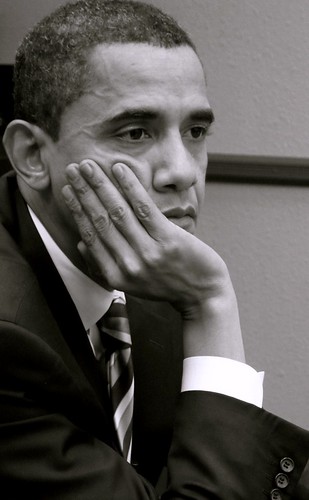
Obama: No more campaigns


Obama, McCain, Palin, Obama, Palin, Palin, McCain....

I am glad that they finally picked a president in the US. This of course is a problem for CNN, since now they have to actually focus on real news. Maybe now we can get the real picture of the American economy. As an avid news watcher, it seemed that whenever I would turn to CNN, there would only be news of the election. It would be interesting to see the coming headlines and to see where the new focus is going to be for the media.

It was no surprise for me to see Obama getting elected. Even though McCain probably deserves the post given his complete dedication to his country backed up by an impressive military service record. I don't want to use age discrimination, but at 72...and with Palin as VP...you get the picture.


Let us see what is happening in the financial media (BBC/CNN/FT):
Fannie Mae reports $29 billion loss (uhoh)
Asian, Pacific stocks track Wall Street losses
Forecast 2009; Consumer prises will stop rising so fast
DHL announces 9500 job cuts
IEA warns of a new supply crunch
Unemployment hits 11 year high
Christmas spending to fall 7%
Credit crunch hits church savers

The only good news I can seem to find relating to finance from BBC and FT is that China hit a new record trade surplus.

Welcome to recession.

Sunday, 19 October 2008

Make Money Like a Buffet!


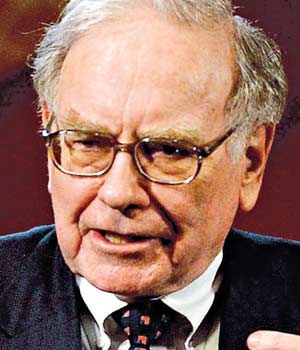
Warren Buffet, is now “the richest man alive according to Forbes, passing Bill Gates who has held the title for the past 15 years. Although he is 77 years old, he is still eager as ever doing what he has long done best. His “buy and hold” strategy is in action – he is ready to stock up at bargain prices. Since he is regarded as one of the world’s most successful investors, every move he makes and every step he takes within the financial market is religiously watched and copied.

Currently, Mr. Buffet is buying U.S. stocks for his personal account, claiming that he is picking up “a slice of America’s future at a marked-down price”. According to an interview with CNBC, he wants the world to know that it is time to get greedy right now, as fear sends stock prices plunging across the globe. Although he acknowledges that the Credit Crunch is a total “mess” and will only get worse in the nearest future, he argues that over the long-term the stock market will be good. His anticipation of the market, will hopefully calm some of us down! The Buffet-style tips for dealing with Wall Street’s ongoing turmoil are:

1. "Cash combined with courage in a crisis is priceless"
2. "Don’t invest in things you don't understand"
3. "Don't try to catch a falling knife until you have a handle on the risk"

Last but not least, I must say that I think Buffet is a fascinating character who I truly admire. I think that the main reason for his success is that at the end of the day, business to him is like playing Monopoly. He is not afraid of taking risks and he doesn’t mind to wait! Not only is he the richest man alive, he is also probably the most humble one of us all! He still lives in the same house that he bought in 1958 for $31,500 and plans to give away his fortune to charity! Warren Buffet, is now “the richest man alive according to Forbes, passing Bill Gates who has held the title for the past 15 years. Although he is 77 years old, he is still eager as ever doing what he has long done best. His “buy and hold” strategy is in action – he is ready to stock up at bargain prices. Since he is regarded as one of the world’s most successful investors, every move he makes and every step he takes within the financial market is religiously watched and copied.

Saturday, 18 October 2008

Capital Markets Outlook


Recently, I was at an event and heard a presentation from the Chief Investment Officer at RBC Asset Management. As RBC being the 4 largest bank in North America, it has been doing fairly well in this crisis. Now in sum, from what I gather from the presentation is that he is very optimistic. In his 45 min speech I was bombarded with technical analysis and forecasts.

"This crisis is big but the global economy has absorbed some huge hits over the past two decades, and the U.S. balance sheet can accommodate the crisis."

The roots of this crisis is clearly subprime mortgage. What is interesting is that prime mortgage originations have been decreasing since 2005, but in a period of less than a year, u.s. mortgage origination's from subprime rose almost 30%. Why did in one year was there such a large increase in subprime mortgages?

The housing bust is not over, but the rate in change of prices is decreasing.

Some people have a sentiment that there is stagflation however, inflation is receding as a risk.

"Collapse in the equity markets sens indices far below fair value."

"The global stock are now marked down to 1974 levels."

"Research summarizing five banking crises reveals serious declines in equity markets during the first year, then a sharp recovery."

These were some of the statements made by the CIO. In a nutshell, his sentiments is that this is a crisis, and that we are going into recession. However, recession does not mean the end of the world. The financial system will not fail but there will be less economic growth. In the end, we will have to sit this out and wait till investor confidence returns.

The economy is like a giant engine, but throw in a wrench and you can still stall it.

Saturday, 11 October 2008

What about Russia?

While browsing news headlines, I came upon a very interesting article about how the crisis has taken on its toll in Russia and how they were handling it.

Currently, the Russian stock market is closed and for good reasons. When the market falls 11.3 percent in half an hour, that surely is a danger sign. That was almost double what CAC40 experienced in a time period of 3 months. You would think that this would cause grand instability and chaos in the Russian economy. However, that is not the case.

In my previous post, I was discussing the role of the media and how it has an influence on people's perceptions of the economy. It looks like the Russian government read my last blog post and are strictly controlling the media. It is forbidden to use the word "crisis" when talking about Russia. You can't say shares are plunging but must use neutral terms. Opinion polls show that Russians think that the economy is in very good shape.
Although I am a firm believe in freedom of speech, Russia shows a good example where the media is controlled in some way in desperate times to achieve stability.